25 Writing Prompt Ideas for Students: Beginning of the Year Activities for Grades 3–5
The first week of school doesn’t have to mean staring at a blank piece of paper.
Between teaching classroom expectations, organizing supplies, learning names, and building classroom routines, planning engaging writing lessons can quickly become overwhelming. That’s why I rely on simple, meaningful writing prompt ideas that help students jump right into writing while giving me valuable insight into who they are as learners.
Whether you’re searching for writing prompts for students, 3rd-grade writing prompts, 4th-grade writing prompts, or 5th-grade writing prompts, you’re in the right place. In this post, I’m sharing 25 of my favorite beginning-of-the-year writing prompts, along with practical classroom ideas for using them during morning work, writing workshop, literacy centers, and independent writing time.
You’ll also find ideas for opinion-writing prompts, informational-writing prompts, and creative-writing activities that encourage students to think, reflect, and build confidence from the very first week of school.
Video coming soon!
I’ll be sharing how I use beginning-of-the-year writing prompts in my own classroom, along with classroom examples, organization tips, and ways to keep students engaged throughout the month.
Writing Prompts for Students in Grades 3–5
One of the reasons I love using writing prompts is their flexibility. The same prompt can be adapted for different grade levels simply by adjusting your expectations for organization, details, and writing conventions.
3rd Grade Writing Prompts
For third graders, I focus on helping students build confidence and develop complete paragraphs. I encourage them to include details, transition words, and strong endings without overwhelming them with lengthy assignments.
4th Grade Writing Prompts
Fourth graders are ready to expand their ideas, provide supporting details, and experiment with different writing genres. Beginning-of-the-year writing prompts help establish expectations while giving students opportunities to strengthen their writing stamina.
5th Grade Writing Prompts
By fifth grade, students can use writing prompts to practice deeper thinking, support opinions with evidence, and organize informational writing. Many prompts naturally lead into classroom discussions, research projects, or longer writing assignments later in the year.
Why Use Writing Prompts at the Beginning of the School Year?
The first weeks of school set the tone for everything that follows. Students are learning classroom expectations, meeting new classmates, and adjusting to new routines. Daily writing provides a predictable activity that helps create consistency during a busy time.
Here are just a few reasons writing prompts are one of my favorite back-to-school activities.
Build Writing Stamina
After summer break, many students need time to rebuild their writing endurance. Starting with short, engaging prompts helps students ease back into writing without feeling overwhelmed.
Instead of expecting students to produce lengthy essays right away, they can practice writing a little each day. As the weeks go on, you’ll likely notice students writing longer responses, adding more details, and becoming more comfortable sharing their ideas.
Get to Know Your Students
Writing often reveals things that students might not share during classroom discussions.
A simple prompt can tell you about a student’s interests, favorite hobbies, goals, family traditions, or even worries about the new school year. These insights can help you build stronger relationships and create lessons that connect with your students’ experiences.
Establish a Daily Routine
Students thrive on consistency.
When writing becomes part of the daily schedule, students know exactly what to expect. They learn where to find materials, how to get started independently, and what quality work looks like.
That consistency also saves instructional time because you’re not explaining a new activity every day.
Encourage Every Student to Participate
Not every student enjoys raising their hand during discussions, but nearly every student has something to say.
Writing prompts give quieter students a chance to share their thinking in a way that feels comfortable. Over time, many students become more willing to participate in classroom conversations because they’ve already organized their thoughts through writing.
Practice Multiple Writing Genres
Beginning-of-the-year prompts don’t have to focus only on personal narratives.
You can incorporate opinion writing, informational writing, creative storytelling, descriptive writing, and even poetry. Exposing students to different genres early in the year helps them become more flexible and confident writers.
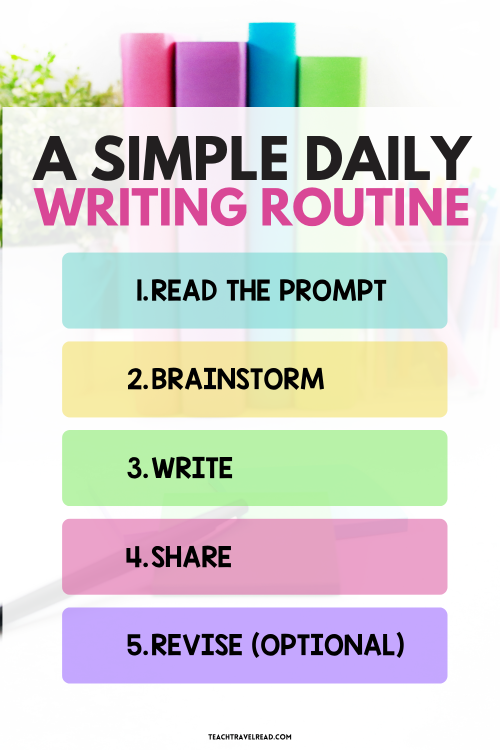
How to Build a Simple Daily Writing Routine
One mistake many teachers make is saving writing for “when there’s time.” Unfortunately, that time rarely appears.
Instead, consider creating a short daily writing routine that students can count on.
Even 10–15 minutes each day adds up to meaningful writing practice throughout the school year.
Here are a few ways to fit writing into your schedule.
Morning Work
Writing prompts make excellent morning work because students can begin independently while you greet students, take attendance, or handle classroom tasks.
Students settle quickly, the classroom stays calm, and everyone starts the day focused.
Writing Warm-Ups
Use a prompt as a quick warm-up before your writing lesson.
Students spend a few minutes getting their ideas flowing before transitioning into your mini lesson or writing workshop.
Literacy Centers
Place writing prompts in a literacy center so students have meaningful independent work during rotations.
This works especially well when prompts are organized by month or season.
Early Finisher Activity
Instead of asking students to “find something to do,” keep a basket of writing prompts available for students who finish assignments early.
Students stay engaged while continuing to strengthen their writing skills.
Choice Boards
Offering students several prompt options increases motivation because students feel ownership over what they write.
Many teachers find that reluctant writers become much more engaged when they can choose the topic that interests them most.
Writing Notebooks
Keep a dedicated writing notebook throughout the year.
Students enjoy looking back at earlier entries and seeing how much they’ve grown as writers.
25 Writing Prompt Ideas for Students
Whether you’re planning morning work, writing workshop, literacy centers, or independent practice, these writing prompt ideas are designed to get students thinking, writing, and sharing from the very first week of school. The prompts below include a mix of narrative, opinion, informational, creative, and reflective writing, making them perfect for upper elementary classrooms.
Narrative Writing Prompts
Narrative writing gives students the opportunity to tell stories, share personal experiences, and use their imagination. These beginning-of-the-year prompts help students become comfortable writing while giving you a chance to learn more about them.
📝 Prompt #1
If someone had never met you before, what are three things they should know about you?
📝 Prompt #2
What was your favorite memory from summer break? Tell the story using plenty of details.
📝 Prompt #3
Describe your perfect Saturday from beginning to end.
📝 Prompt #4
Write about a time you felt proud of yourself. What happened, and why is that memory important?
📝 Prompt #5
Imagine it’s the last day of this school year. Tell the story of your best day in fourth (or third/fifth) grade.
Opinion Writing Prompts
Opinion writing prompts encourage students to share their ideas while supporting their thinking with reasons and examples. These are great discussion starters during the first weeks of school.
📝 Prompt #6
What makes a classroom feel welcoming? Explain your opinion.
📝 Prompt #7
What is the most important classroom rule? Why?
📝 Prompt #8
Should students have homework during the first week of school? Explain your thinking.
📝 Prompt #9
Which classroom job is the most important? Support your answer with reasons.
📝 Prompt #10
What qualities make someone a great friend? Which quality is the most important?
Informational Writing Prompts
Informational writing prompts help students explain ideas clearly, organize information, and teach others about a topic.
📝 Prompt #11
Explain how to have a successful first day of school.
📝 Prompt #12
Describe the steps for being a respectful classmate.
📝 Prompt #13
Teach a new student how your classroom works.
📝 Prompt #14
Explain what makes a good learning environment.
📝 Prompt #15
Describe one of your favorite hobbies and explain how someone else could get started.
Creative Writing Prompt Ideas
Creative writing encourages imagination while helping students practice descriptive language and storytelling.
📝 Prompt #16
Your backpack comes to life after school. What adventures does it have?
📝 Prompt #17
You discover a secret room hidden inside your school. What’s inside?
📝 Prompt #18
Your class pet suddenly starts talking. What does it tell everyone?
📝 Prompt #19
Invent a brand-new school subject. What would students learn?
📝 Prompt #20
Imagine recess lasted all afternoon. What exciting adventures would happen?
Reflection Writing Prompts
Reflection prompts encourage students to think about their goals, experiences, and personal growth as they begin a new school year.
📝 Prompt #21
What are you most excited about this school year?
📝 Prompt #22
What writing skill do you hope to improve this year?
📝 Prompt #23
Describe a challenge you want to overcome this school year.
📝 Prompt #24
How do you hope your teacher remembers you at the end of the year?
📝 Prompt #25
What do you hope you’ll be able to do by the end of this school year that you can’t do today?
Tips for Getting the Most Out of Writing Prompts
Writing prompts are most effective when they’re part of a consistent routine rather than an occasional activity.
Encourage students to write without worrying about perfection during the first draft. The goal is to develop confidence and a love of writing before focusing heavily on editing and revising.
Instead of saving writing prompts for your writing block, try using them throughout your day:
☀ Morning Work
🛎️ Bell Ringers
📖 Writing Centers
✏️ Independent Journals
👥 Partner Discussions
🏠 Homework
⏱️ Fast Finishers
📋 Formative Assessments
📚 Small Groups
💻 Digital Learning
Giving students opportunities to share their responses with partners or the whole class can also build classroom community while showing students that every writer has unique ideas worth sharing.
Finally, celebrate progress instead of perfection. Some students may write only a few sentences during the first week, while others will fill an entire page. Both are making progress, and consistent practice helps every student grow.
The more consistently students write, the more comfortable they become putting their ideas on paper.
Looking for More Writing Prompt Ideas?
If these writing prompt ideas have inspired you, imagine having engaging writing prompts for students planned for every month of the school year.
My monthly Writing Prompts resources are designed for busy upper elementary teachers and include narrative, opinion, informational, and poetry writing prompts, printable student pages, digital slides, writing calendars, and writing choice boards.
Whether you teach 3rd grade, 4th grade, or 5th grade, you’ll have ready-to-use writing activities that save planning time while helping students build confidence as writers.
You can choose individual monthly resources, grade-level bundles, or the complete Writing Prompts Mega Bundle to keep writing fresh and engaging all year long.
Why Elementary Writing Prompts Matter
Daily elementary writing prompts do more than fill a few extra minutes in your schedule. They help students organize their thoughts, practice different writing genres, and become more confident communicators over time.
Because writing prompts can be used during morning work, writing workshop, literacy centers, homework, or as early finisher activities, they’re one of the most flexible literacy tools you can add to your classroom routine.
Whether you’re introducing opinion writing prompts, informational writing prompts, or narrative writing, consistent practice helps students become stronger writers throughout the school year.
Frequently Asked Questions
How long should students spend on a writing prompt?
I typically set aside 10–15 minutes for daily writing. Some days students finish quickly, while other prompts naturally lead to longer discussions and writing sessions.
Are writing prompts good for morning work?
Absolutely! Morning work is one of my favorite times to use writing prompts because students can get started independently while I greet students, check in with families, or take attendance.
Can I use these prompts in a writing center?
Yes! Writing prompts work wonderfully in literacy centers. Pair them with writing paper, dictionaries, or revision checklists for an easy, low-prep station.
Will these work for reluctant writers?
Yes. Short, engaging prompts remove much of the pressure students feel with larger writing assignments. Over time, reluctant writers often become more confident because they’re writing consistently in a supportive environment.
Your Action Step
Tomorrow morning, choose just one writing prompt.
Set a timer for 10 minutes.
Then simply observe.
You’ll learn who loves to write, who needs encouragement, who’s full of creative ideas, and who might need extra support. That single writing session can tell you more than any beginning-of-the-year assessment ever could.
Check Out These Related Posts

Meet the Teacher

Hi, I’m April! I’m an upper elementary teacher who loves creating engaging literacy resources that save teachers time and help students become confident readers and writers. When I’m not in the classroom, you’ll usually find me creating new resources, reading a good book, traveling, or sharing practical teaching ideas here on Teach Travel Read.